Exterior Elevated Element (EEE): What It Is, Why It Matters, and Why It Can’t Be Ignored
Exterior Elevated Elements (EEE) are critical structural components found in many residential buildings across California. In areas like the San Francisco Bay Area and Greater Los Angeles, these structures are constantly exposed to moisture, changing weather conditions, and daily structural loads, which can gradually affect their strength and safety over time.
Because of this exposure, even small issues can develop into serious safety risks over time. Many property owners do not realize that balconies, decks, and walkways fall under strict safety regulations until inspections become mandatory.
At Great Escape Service & Inspection, we work with property owners across California, helping them understand Exterior Elevated Element requirements and stay compliant with California laws.
What Is an Exterior Elevated Element (EEE)?
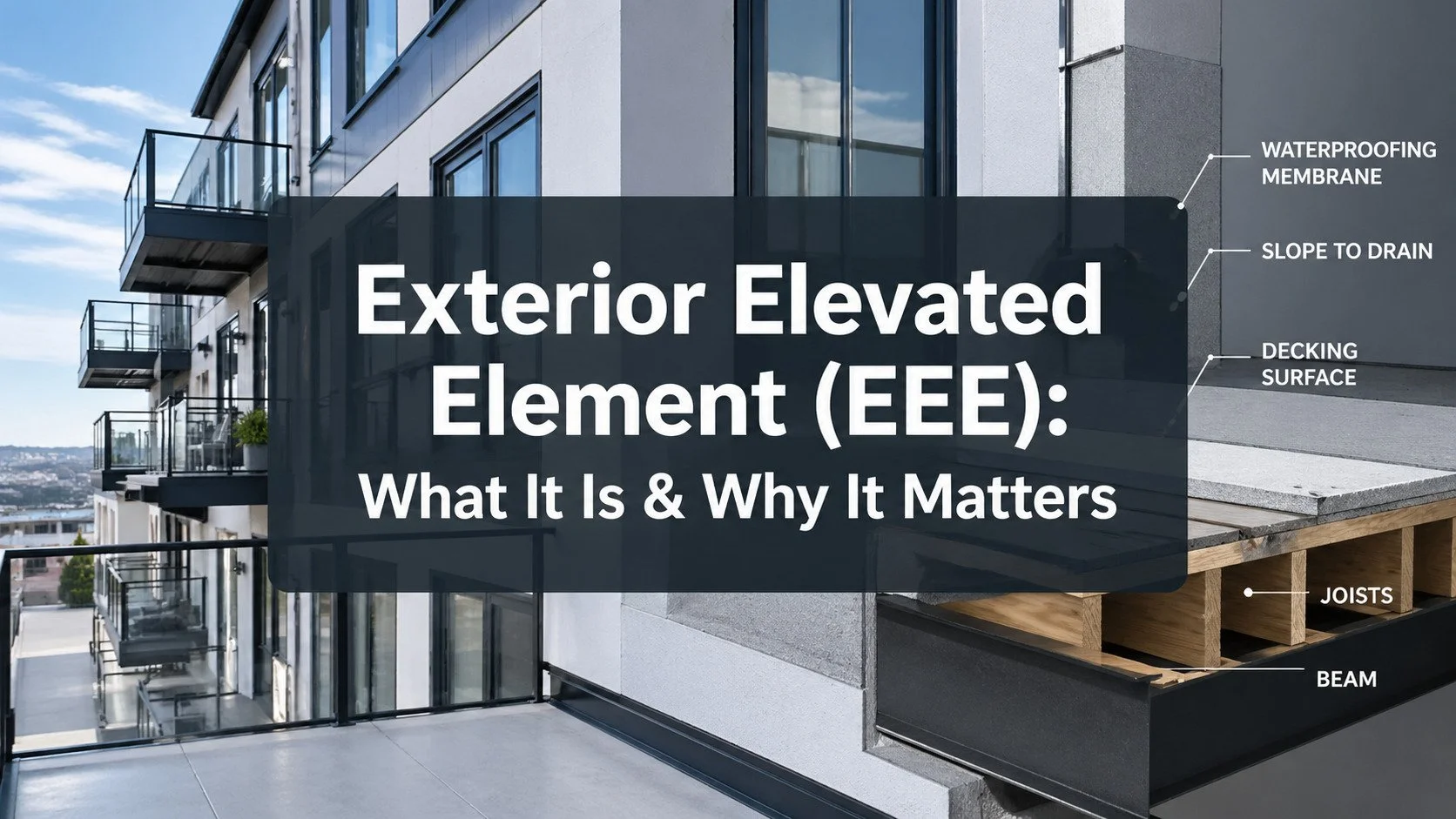
An Exterior Elevated Element (EEE) is any structural component of a building that extends beyond the exterior wall and is elevated above ground level. In simple terms, it includes structures that project outward from the building, are more than 6 feet above the ground, are designed for human use, and rely on load-bearing structural components for support.
Under California regulations, an EEE is defined as load-bearing components together with associated waterproofing systems, which must be inspected regularly to ensure they remain safe and functional.
Common Examples of Exterior Elevated Elements
Many everyday building features fall under the EEE category.
These include:
Balconies
Decks
Walkways
Stairways
Porches
Guardrails and handrails
In areas like Oakland / East Bay and San Jose / South Bay, older multi-family buildings commonly have wood-supported balconies and decks that require inspection under EEE regulations.
Why Exterior Elevated Elements Are Regulated
Exterior Elevated Elements are regulated because they are constantly exposed to environmental conditions that can lead to hidden structural damage. Common risks include moisture intrusion, failure of waterproofing systems, wood decay and dry rot, corrosion of connectors, and gradual structural weakening over time.
Because these problems often develop beneath the surface, they may not be immediately visible until the structure becomes unsafe, which is why regular inspections are required under California law.
What Components Are Included in an EEE Inspection?
EEE inspections evaluate both structural integrity and moisture protection systems.
A professional inspection includes:
Load-bearing components such as joists and beams
Waterproofing systems (membranes, coatings, sealants)
Flashing and drainage systems
Railings and safety barriers
Signs of water intrusion or structural damage
The goal is to determine whether these elements are safe, functional, and free from hazardous conditions.
EEE and SB 721 Inspection Requirements
SB 721 applies to apartment buildings with three or more units and requires the inspection of Exterior Elevated Elements to ensure structural safety. Under this law, inspections must be conducted every six years and include a minimum sample of 15 percent of each element type.
The process involves evaluating load-bearing structural components and associated waterproofing systems, as well as identifying safety hazards such as decay or deterioration. These inspections play an important role in keeping buildings in regions like the San Francisco Bay Area and Sacramento Area structurally safe for occupants.
EEE and SB 326 Inspection Requirements
SB 326 applies to condominiums and HOA-managed properties and focuses on maintaining the safety of Exterior Elevated Elements in these communities. Under this law, inspections must be conducted every nine years and require statistically significant sampling to assess conditions accurately.
The inspection includes evaluating structural performance and overall safety, with responsibility assigned to HOA boards to ensure compliance. This regulation helps ensure that exterior elevated elements in HOA communities across Marin / North Bay and Greater Los Angeles are regularly evaluated and properly maintained.
Common Problems Found in Exterior Elevated Elements
During inspections, several recurring issues are often identified:
Wood rot and structural decay
Water intrusion due to failed waterproofing
Cracked or deteriorated surfaces
Loose or unstable railings
Corroded fasteners and connectors
Poor drainage systems
Many of these issues are hidden and require professional inspection to detect early.
Why Exterior Elevated Element Inspections Are Critical
Exterior Elevated Elements must safely support:
Occupant loads
Furniture and equipment
Environmental stress, such as rain and temperature changes
If these structures fail, the consequences can be severe. Regular inspections of elevated exterior elements help identify risks early and prevent structural failures.
Property owners in Oakland / East Bay and San Jose / South Bay often schedule inspections proactively to avoid compliance issues and costly repairs.
How Great Escape Service & Inspection Can Help
Managing Exterior Elevated Elements and staying compliant with California laws can be complex, especially for property owners and managers. Great Escape Service & Inspection provides professional balcony and deck inspections, exterior elevated element inspections, and CA-SB 721 and CA-SB 326 inspections.
Our team carefully evaluates structural components, waterproofing systems, and safety features to identify hidden issues and ensure full compliance. Property owners rely on Great Escape Service & Inspection to maintain safe buildings, reduce risks, and meet all inspection requirements.
Frequently Asked Questions
What is an Exterior Elevated Element (EEE)?
An Exterior Elevated Element (EEE) is a structural component, such as a balcony, deck, or walkway that extends beyond a building and is elevated above ground.
Are all balconies considered EEE?
Most balconies are considered EEE if they are elevated more than 6 feet and rely on structural support.
Why are EEE inspections required?
EEE inspections help identify structural hazards such as decay, moisture damage, and deterioration. These inspections ensure occupant safety and prevent structural failure.
How often should Exterior Elevated Elements be inspected?
SB 721 requires inspections every 6 years for apartments, while SB 326 requires inspections every 9 years for condominiums and HOA properties.