What Is a Cantilever Used For? Common Uses in Balconies, Decks & Construction
Cantilever structures are widely used in modern construction because they allow parts of a building to extend outward without visible external support underneath. These designs are commonly seen in balconies, decks, overhangs, stairways, and architectural features where both structural performance and space efficiency are important.
In areas like the San Francisco Bay Area and Greater Los Angeles, cantilever systems are frequently used in residential and multi-family buildings. While these structures offer design flexibility and open space below, they also require proper engineering, waterproofing, and regular inspection to ensure long-term safety.
At Great Escape Service & Inspection, we regularly inspect cantilever-supported balconies and decks across California, helping property owners identify structural concerns before they become serious safety risks.
What Is a Cantilever?
A cantilever is a structural element that extends outward from a building while being supported only at one end. Instead of relying on columns or posts underneath, the structure transfers its load back into the main building framework.
Cantilever systems are designed to support:
Human occupancy
Furniture and equipment
Environmental loads such as wind and rain
Because the support is internal, cantilever structures create a clean architectural appearance while maximizing usable space.
How Does a Cantilever Structure Work?
A cantilever works by distributing weight back into the primary structural system of the building.
The portion extending outward creates stress on the support connection, which means proper engineering is critical. Structural components such as joists, beams, connectors, and framing must be carefully designed to handle both vertical and horizontal loads safely.
When waterproofing systems fail or structural components weaken, cantilever structures can gradually lose strength over time.
Common Uses of Cantilever Structures
Cantilever systems are used in many types of residential and commercial construction.
Some of the most common applications include:
Balconies
Decks
Roof overhangs
Walkways
Stair systems
Architectural projections
These systems are especially common in multi-family buildings where maximizing exterior space is important.
Cantilever Balconies
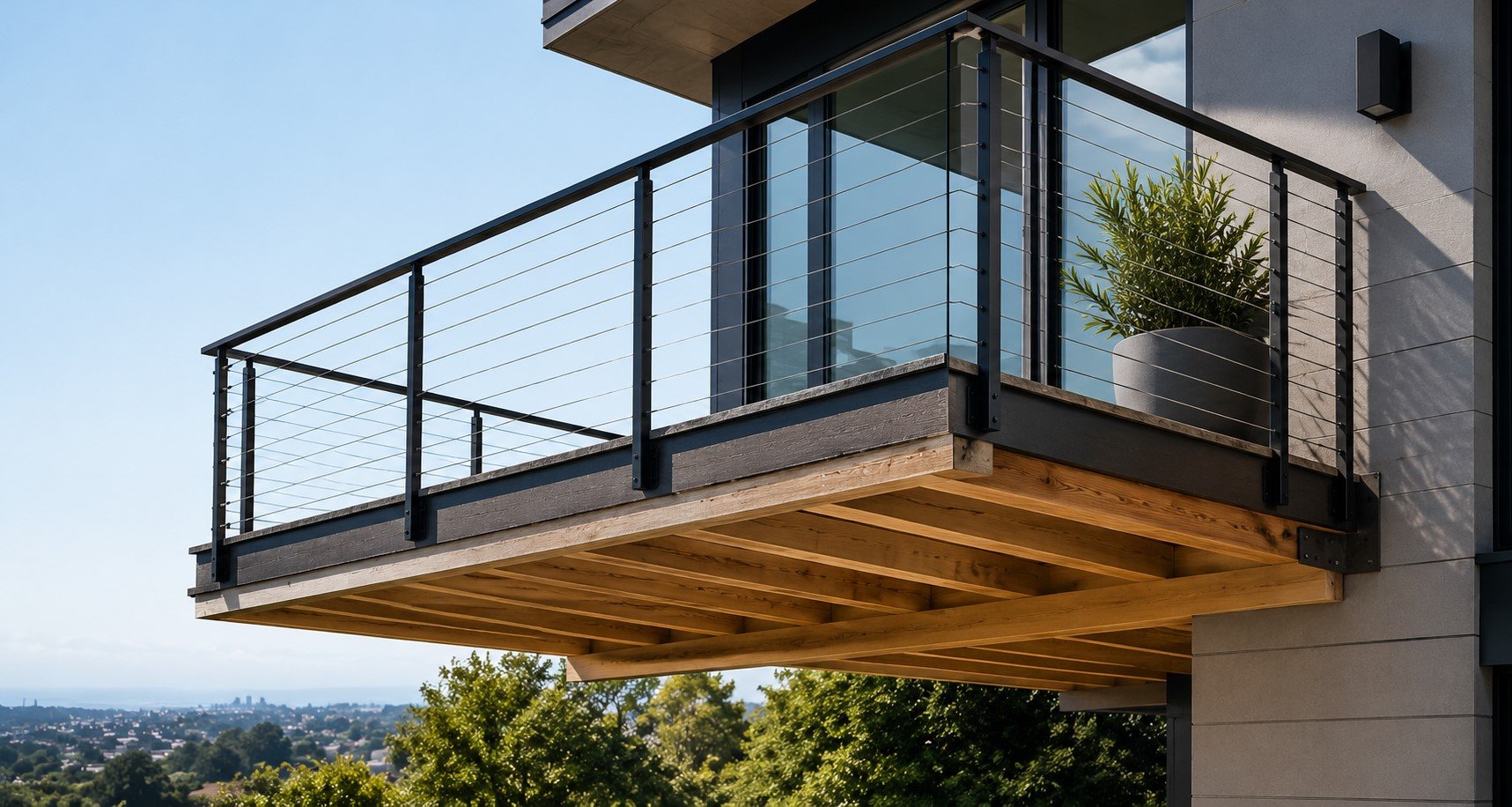
Cantilever balconies extend outward from the building without visible support columns beneath them. This design creates open space below the balcony, provides a modern architectural appearance, and allows for better use of exterior space while maintaining a clean structural look.
However, because the balcony relies heavily on internal structural connections, moisture intrusion and wood deterioration can create hidden structural risks over time.
In many California buildings, cantilever balconies fall under Exterior Elevated Element (EEE) regulations and may require inspection under CA-SB 721 or CA-SB 326.
Cantilever Decks
Cantilever decks are commonly used in residential buildings to extend outdoor living areas beyond the main structure. Compared to standard supported decks, cantilever decks require fewer visible supports, create cleaner open space beneath the structure, and rely heavily on the strength and integrity of the structural framing system.
Because these systems carry significant structural loads, professional deck inspection services are important for identifying hidden damage, waterproofing failures, or weakening structural connections.
Why Cantilever Structures Need Regular Inspection
Cantilever systems are constantly exposed to environmental conditions that can gradually weaken structural components.
Common problems include:
Moisture intrusion
Waterproofing failure
Wood decay and dry rot
Corroded connectors
Structural movement over time
Many of these issues develop inside concealed framing areas, making them difficult to detect without professional evaluation. Regular inspections help identify problems before they create serious safety hazards.
Cantilever Structures and Exterior Elevated Element (EEE) Laws
Many cantilever balconies and decks are considered Exterior Elevated Elements (EEE) under California law. An EEE generally includes structural components that extend beyond exterior walls, are elevated more than 6 feet above ground level, are designed for human use, and rely on wood or wood-based structural support.
Because these structures are exposed to weather and structural stress over time, they often require professional inspection to ensure they remain structurally safe and free from hazardous conditions.
SB 721 and Cantilever Structures
Under CA-SB 721, apartment buildings with three or more units are required to inspect qualifying Exterior Elevated Elements every 6 years. These inspections evaluate load-bearing structural components, waterproofing systems, flashing and drainage systems, and signs of deterioration or decay that could affect structural safety.
The law also requires inspectors to examine at least 15% of each type of Exterior Elevated Element during the inspection process.
Common Warning Signs of Cantilever Problems
Property owners should watch for warning signs that may indicate structural issues.
Common indicators include:
Sagging or uneven surfaces
Cracks near structural connections
Water stains or moisture damage
Soft or deteriorated wood
Loose railings
Excessive movement or vibration
If these conditions appear, a professional inspection should be scheduled promptly.
Why Waterproofing Is Critical for Cantilever Structures
Waterproofing systems play a major role in protecting cantilever structures from long-term deterioration.
Associated waterproofing elements include:
Flashings
Membranes
Sealants
Protective coatings
When waterproofing systems fail, moisture can penetrate concealed framing and weaken structural components over time.
California regulations specifically require inspection of both load-bearing and associated waterproofing systems because of their importance to structural safety.
Professional Cantilever Balcony & Deck Inspection Support
Because cantilever balconies and decks rely heavily on concealed structural connections, damage can develop internally long before visible warning signs appear. Moisture intrusion, weakened framing, and waterproofing failure are some of the most common issues found during inspections.
At Great Escape Service & Inspection, we help property owners throughout California, including the San Francisco Bay Area and Greater Los Angeles, evaluate the condition of elevated exterior structures and ensure compliance with current safety regulations.
Our team provides:
Balcony inspections
Deck inspections
Exterior Elevated Element (EEE) inspections
CA-SB 721 apartment inspections
CA-SB 326 HOA and condominium inspections
We carefully assess structural stability, waterproofing performance, drainage conditions, railing safety, and signs of hidden deterioration to help property owners address problems early and reduce long-term repair risks.
Frequently Asked Questions
What is a cantilever used for in construction?
Cantilevers are commonly used for balconies, decks, overhangs, stairways, and architectural projections. They allow structures to extend outward without visible support underneath.
Are cantilever balconies safe?
Cantilever balconies are safe when properly designed, waterproofed, and maintained. However, hidden structural deterioration can develop over time if inspections are neglected.
Do cantilever decks require inspection?
Yes. Many cantilever decks fall under Exterior Elevated Element regulations and should be inspected regularly for structural safety and moisture-related damage.
What causes cantilever structures to fail?
Common causes include moisture intrusion, waterproofing failure, wood decay, corroded connectors, and weakening structural connections.