Balcony and Deck Safety: Why They Should Not Be Used for Storage
Balconies and decks provide valuable outdoor space for fresh air, relaxation, and safe access to exterior areas. However, many residents and property owners use these spaces as storage areas for boxes, unused furniture, or equipment. While this may seem convenient, balconies and decks are not designed to function as long-term storage spaces.
During professional inspections, Great Escape Service & Inspection frequently observes balconies cluttered with stored items that create safety and structural concerns. Using balconies and decks for storage can place unnecessary stress on structural components, hide early warning signs of damage, and interfere with proper inspections.
Understanding why these areas should remain clear helps protect the structural integrity of the building and ensures exterior elevated elements remain safe for occupants.
Why Your Balcony and Deck Should Not Be Used as Storage
Balconies and decks are engineered primarily for occupant use and light outdoor furniture, not for storing heavy materials or stacked items. Structural systems such as joists, beams, ledger boards, and railing posts are designed to support people and normal balcony activities.
When heavy objects are stored on these structures, the weight often becomes concentrated in a small area rather than evenly distributed across the walking surface. Over time, this additional stress can lead to movement in structural components, weakening of connections, and deterioration in moisture-exposed materials.
Maintaining proper use of balconies and decks helps preserve structural safety and allows inspections to be performed effectively.
1. Excess Weight Can Stress Structural Components
Balconies and decks rely on load-bearing components such as joists, beams, posts, and connection hardware that transfer structural loads back to the building.
When storage items such as boxes, appliances, construction materials, or heavy planters are placed on balconies, they can create concentrated loads. These loads may exceed what the structure was intended to handle in localized areas.
Over time, this added weight may contribute to:
Structural sagging or movement
Increased stress on joists and beams
Weakening of connection hardware
Premature deterioration of structural materials
Keeping balconies free from stored items helps maintain proper load conditions and supports long-term structural performance.
2. Stored Items Can Hide Structural Damage
One of the most serious risks of balcony storage is that it can conceal early signs of structural deterioration.
When large objects are placed across balcony floors or against railings, they block the visibility of important structural areas that inspectors need to evaluate. Problems that may remain hidden include:
Wood decay or dry rot
Water intrusion around flashing
Cracks in the walking surface
Loose railing connections
Corroded connectors and fasteners
Because many structural issues develop gradually, keeping balcony surfaces visible helps detect problems earlier, before they become serious safety hazards.
3. Storage Can Block Drainage and Waterproofing Systems
Balcony and deck systems rely on proper drainage and waterproofing to prevent moisture damage.
When stored items block drainage paths or trap water against the balcony surface, moisture may remain in contact with structural components for long periods. This can lead to:
Water intrusion beneath surfaces
Wood decay and fungal growth
Waterproofing membrane damage
Deterioration of load-bearing framing
Maintaining clear balcony surfaces allows water to drain properly and helps preserve waterproofing systems.
4. Railing Safety Can Be Compromised
Guardrails and balcony railings are critical safety components designed to prevent falls from elevated structures.
When storage items are placed against railings, they may introduce additional stress on railing posts or reduce visibility of loose connections. In some cases, stacked items can even create climbing hazards for children.
Keeping railing areas clear helps maintain railing stability and ensures that any potential issues can be easily identified during inspections.
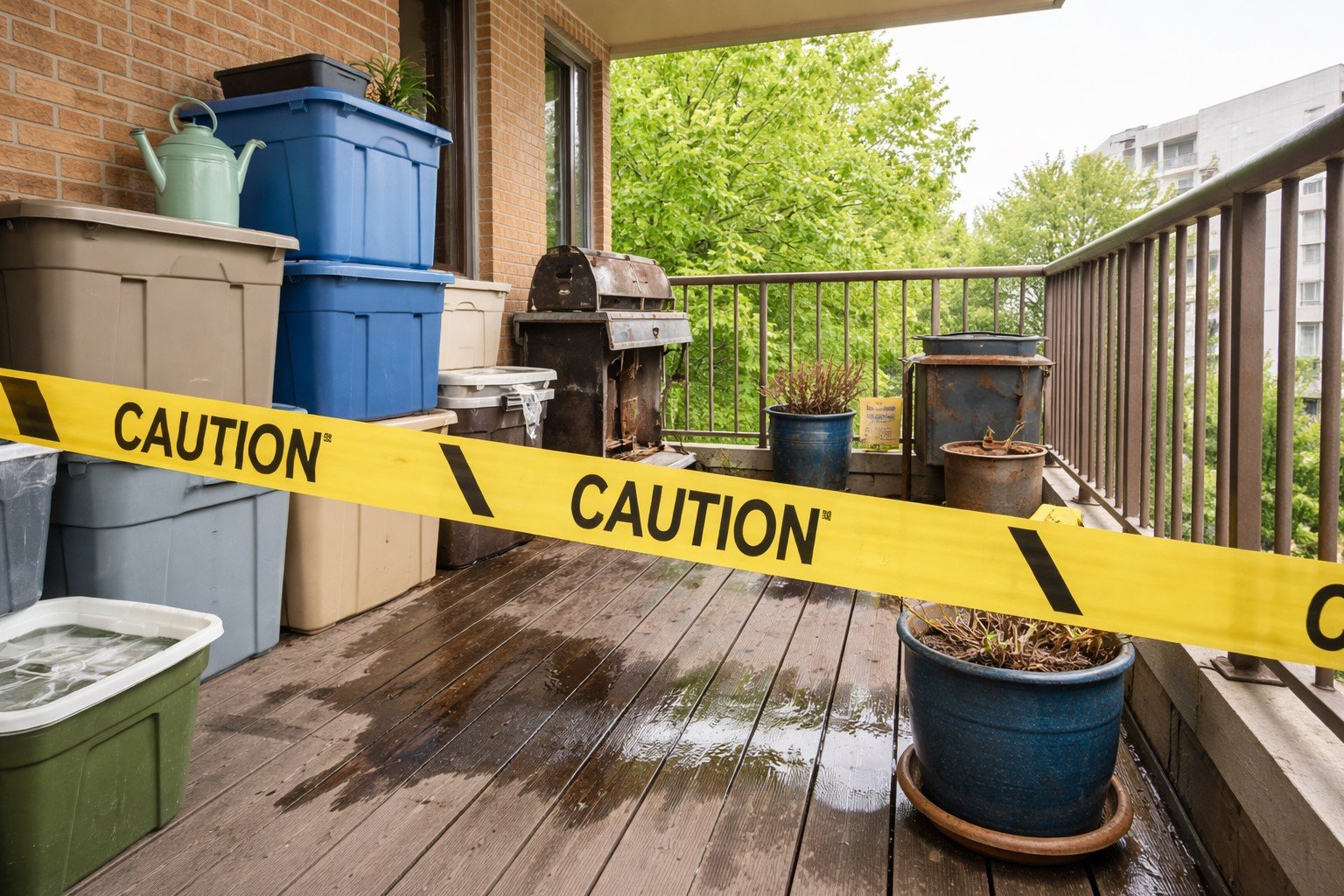
Typical Balcony and Deck Load Limits
Many people assume balconies and decks can support unlimited weight, but these structures are designed with specific load limits. Residential balconies are typically engineered for occupancy loads that include people, light furniture, and normal daily use.
Heavy stored items such as appliances, large planters, or stacked materials may exceed the intended load capacity when concentrated in one area. This added stress can affect joists, beams, and structural connections.
Understanding load limits helps property owners avoid conditions that may compromise the safety of exterior elevated structures.
Real Inspection Findings Related to Balcony Storage
During structural inspections, inspectors often observe situations where long-term storage contributes to deterioration.
Common inspection findings related to balcony storage include:
Water trapped beneath storage containers or planters
Hidden wood decay beneath stored furniture
Loose railings caused by leaning objects
Corroded fasteners in moisture-prone areas
Blocked drainage systems
These issues often develop slowly and may remain unnoticed until a professional inspection is performed.
Storage Can Interfere With Balcony Inspections
In many multi-family buildings, balconies and decks are classified as Exterior Elevated Elements (EEE) that require periodic structural inspection.
California law requires inspections of certain exterior elevated elements, such as balconies, decks, stairways, and walkways in buildings with three or more units to verify that structural components and waterproofing systems remain safe.
When balconies are cluttered with stored items, inspectors may have difficulty examining critical areas of the structure. Keeping balconies clear helps ensure inspections can be performed thoroughly and accurately.
Property owners often schedule professional balcony inspection services, including CA-SB 721 and CA-SB 326 inspections, to evaluate structural safety and identify potential risks before they develop into larger problems.
HOA and Building Rules Often Restrict Balcony Storage
In many condominium and apartment buildings, balconies are considered part of the building’s exterior systems rather than private storage areas.
Because of this, homeowner associations and building management policies often restrict how balconies may be used. Common balcony rules include:
Prohibiting storage boxes or clutter
Limiting large planters or equipment
Restricting appliances or bulky furniture
Preventing items from blocking the railing's visibility
These guidelines help maintain building safety, appearance, and compliance with structural inspection requirements.
Safe Alternatives to Balcony Storage
If additional storage space is needed, it is best to use areas designed specifically for storage.
Safer alternatives include:
Indoor storage closets
Garage or basement storage areas
Designated storage rooms
HOA-approved storage solutions
Using proper storage spaces helps protect balcony structures and reduces unnecessary stress on exterior elevated elements.
How Great Escape Service & Inspection Can Help
If you are unsure whether your balcony or deck is structurally safe, a professional evaluation can help identify potential concerns early.
Great Escape Service & Inspection specializes in evaluating exterior elevated elements, including balconies, decks, walkways, stairways, and guardrails. Our inspections focus on structural integrity, moisture conditions, waterproofing systems, and potential safety risks affecting building occupants.
Through professional balcony inspection services, our team helps property owners maintain safe structures, detect early signs of deterioration, and ensure compliance with inspection requirements.
Maintaining clear balconies and scheduling periodic inspections with Great Escape Service & Inspection helps protect both occupants and the long-term condition of your building.
Frequently Asked Questions
Can balconies be used for storage?
No, Balconies are intended for occupant use and light outdoor furniture rather than long-term storage. Storing heavy items can stress structural components and increase safety risks.
Why is balcony storage considered unsafe?
Storage can add excessive weight, trap moisture, and hide structural damage. These conditions may lead to deterioration or prevent inspectors from identifying potential hazards.
Can stored items affect balcony inspections?
Yes. Large objects may block access to structural components and waterproofing systems that inspectors need to evaluate. Clear balconies allow inspections to be conducted properly.
Are decks affected by the same storage risks?
Yes. Decks rely on load-bearing framing systems and waterproofing components similar to balconies. Excess storage weight or blocked drainage can negatively affect deck safety and structural performance.
What should I do if my balcony already has stored items?
Removing heavy or unused items is recommended to reduce structural stress and improve inspection access. If there are signs of structural issues, scheduling a professional inspection can help identify potential concerns.