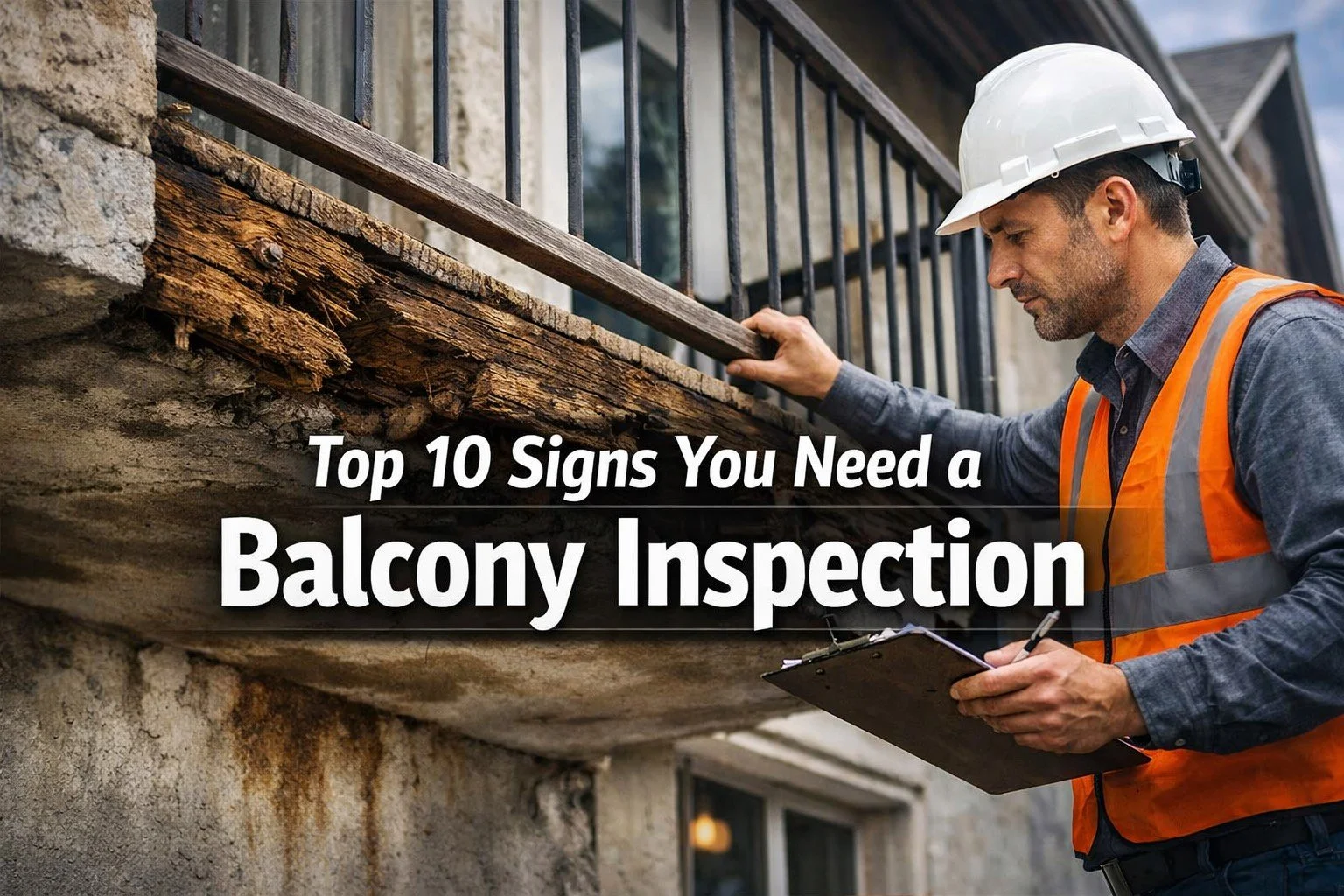
Top 10 Signs You Need a Balcony Inspection: Great Escape Services Guide
Balconies are constantly exposed to weather, moisture, structural loads, and temperature changes. Over time, these conditions can gradually weaken structural components and create safety risks that may not always be immediately visible.
Recognizing early warning signs can help property owners prevent serious structural problems. In many cases, scheduling a professional evaluation early can identify issues before they develop into larger safety hazards.
During inspections, Great Escape Service & Inspection frequently identifies small warning signs that indicate deeper structural concerns affecting balcony safety.
Understanding these signs helps building owners protect occupants while maintaining the long-term integrity of exterior elevated structures.
Why Balcony Inspections Are Important
Balconies are considered exterior elevated elements, meaning they extend beyond the building and rely on load-bearing components for support. Because these structures are elevated above ground level, maintaining their structural stability is critical for occupant safety.
Over time, moisture intrusion, structural movement, and material deterioration may weaken balcony systems. Regular inspections help identify hidden issues before they progress into serious structural failures.
In California, certain buildings must also follow regulations such as CA-SB 721 and CA-SB 326, which require inspection of exterior elevated elements like balconies, decks, stairways, and walkways. Property owners often schedule balcony inspection services to evaluate structural safety and ensure these systems remain safe for occupants.
1. Visible Cracks in the Balcony Surface
Cracks in the balcony floor are often one of the earliest warning signs that something may be wrong. While minor surface cracks can occur from normal wear, expanding or deep cracks may indicate structural movement or moisture intrusion.
These cracks may allow water to penetrate the balcony system and affect underlying structural components. Over time, this can damage waterproofing layers and weaken the framing that supports the balcony.
When cracks appear to grow or allow moisture penetration, a professional inspection can help determine whether structural repairs are necessary.
2. Loose or Wobbly Railings
Balcony railings are essential safety features designed to prevent falls from elevated structures.
If railings move when pressure is applied, this may indicate weakened connections or deterioration around railing posts. Loose railings can result from:
deteriorated wood around posts
corroded fasteners
structural movement in framing components
improper attachment to the balcony structure
Because railing failure can create serious safety hazards, unstable railings should be evaluated by a professional inspector.
3. Signs of Wood Decay or Dry Rot
Wood-supported balconies are vulnerable to moisture damage. When water penetrates structural components, it can lead to wood decay or dry rot, which gradually weakens load-bearing elements.
Common signs of wood deterioration include:
soft or crumbling wood
discoloration or fungal growth
wood that easily breaks apart
persistent moisture exposure
Because wood decay often develops beneath surfaces, structural damage may not always be immediately visible without a detailed inspection.
4. Water Stains or Moisture Damage
Moisture intrusion is one of the most common causes of balcony deterioration.
If water stains appear on balcony surfaces, ceilings below balconies, or structural framing, this may indicate waterproofing failure or drainage problems. Moisture can gradually weaken structural materials and accelerate deterioration.
Early inspection helps identify moisture sources and prevent long-term damage to structural components.
5. Balcony Movement or Sagging
A properly constructed balcony should feel stable when people walk across it.
If a balcony feels uneven, bounces excessively, or shows visible sagging, this may indicate structural weakening in load-bearing components such as joists or beams. Movement in elevated structures should always be evaluated carefully to ensure the balcony remains structurally sound.
Professional inspectors evaluate framing components to determine whether reinforcement or repairs are necessary.
6. Rusted or Corroded Hardware
Balcony systems depend on metal connectors, bolts, and fasteners that hold structural components together.
Over time, moisture exposure can cause these metal parts to corrode. When connectors deteriorate, the structural connection between balcony components may weaken.
Common warning signs include:
rusted bolts or screws
corroded brackets
loose connection plates
visible metal deterioration
A structural inspection can determine whether these components require replacement or reinforcement.
7. Cracks Where the Balcony Connects to the Building
The connection between the balcony and the main building structure is one of the most critical structural areas.
If cracks or separation appear where the balcony attaches to the building, this may indicate structural movement in the ledger board or supporting framing. Because this area carries significant structural loads, visible cracking should always be evaluated promptly.
8. Standing Water on the Balcony Surface
Balcony surfaces should allow water to drain efficiently. If water pools on the balcony surface after rain, it may indicate drainage problems or an improper slope.
Standing water can accelerate deterioration by exposing structural materials to prolonged moisture. Drainage issues can also damage waterproofing membranes and contribute to wood decay.
Inspection can help identify the cause of water ponding and determine whether repairs are required.
9. Surface Deterioration or Peeling Coatings
Protective coatings and finishes help protect balcony surfaces from weather exposure. When these coatings begin to peel, crack, or deteriorate, underlying materials may become vulnerable to moisture intrusion.
Surface deterioration can sometimes indicate deeper waterproofing problems that may require professional evaluation.
10. The Balcony Has Not Been Inspected for Many Years
Even if no obvious damage is visible, balconies that have not been inspected for long periods may still develop hidden structural problems.
Weather exposure, moisture intrusion, and structural movement gradually affect balcony systems over time. Periodic inspections help identify early warning signs that may otherwise go unnoticed.
Many property owners schedule balcony inspection services or exterior elevated element inspections to ensure balconies and decks remain structurally safe.
How Great Escape Service & Inspection Can Help
When warning signs appear, professional evaluation can help determine the true condition of the balcony.
Great Escape Service & Inspection specializes in evaluating exterior elevated elements such as balconies, decks, walkways, and stairways. Our team carefully examines structural components, waterproofing systems, railing stability, and moisture conditions to identify potential safety concerns.
Property owners often rely on Great Escape Service & Inspection for balcony inspection services, deck inspection services, and exterior elevated element inspections, includingCA-SB 721 and CA-SB 326 inspections required for many regulated buildings.
Early inspection helps detect hidden structural issues and ensures balconies remain safe for occupants.
Frequently Asked Questions
What are the most common signs you need a balcony inspection?
Common warning signs include loose railings, cracks in balcony surfaces, wood decay, water damage, and structural movement. These conditions may indicate underlying structural problems that require professional evaluation.
Are balcony inspections required in California?
Certain multi-family buildings must follow inspection regulations such as CA-SB 721 or CA-SB 326. These laws require evaluation of exterior elevated elements, including balconies, decks, stairways, and walkways.
Can small cracks in a balcony be dangerous?
Small cracks may sometimes be cosmetic, but expanding cracks or cracks that allow moisture penetration can indicate structural issues. Professional inspection can determine whether repairs are necessary.
How often should balconies be inspected?
Inspection frequency depends on building age, environmental exposure, and regulatory requirements. Periodic inspections help identify structural deterioration before it becomes a safety concern.