Balcony vs Deck: Design, Structural Differences, and Inspection Requirements
Balconies and decks are both exterior platforms attached to buildings, but they differ in design, structural support, usage, and inspection requirements. While the terms are sometimes used interchangeably, the structural system and regulatory treatment of each can vary significantly.
Understanding the difference between a balcony and a deck is important for homeowners, property managers, and HOAs, especially when inspections and compliance obligations apply.
What Is a Balcony?
A balcony is an elevated exterior platform that projects outward from a building and is typically accessed from an upper-level door. Balconies are usually supported by cantilevered framing or brackets extending from the building structure.
Balconies are commonly found in:
Multi-story residential buildings
Condominiums
Apartment complexes
Mixed-use developments
Because balconies are elevated and directly connected to the building envelope, moisture intrusion and structural integrity are critical safety concerns.
What Is a Deck?
A deck is an exterior platform that may be attached to a building or freestanding. Decks are typically supported by posts, beams, and footings, although some decks are partially cantilevered.
Decks are commonly found in:
Single-family homes
Multi-family buildings
Backyard outdoor living areas
Elevated exterior walkways
Unlike balconies, decks often have visible vertical supports beneath them.
Design and Structural Differences
Although balconies and decks may look similar, their structural systems often differ.
Support System
Balcony: Often cantilevered or bracket-supported, relying heavily on concealed framing inside the building.
Deck: Typically supported by vertical posts and beams transferring load directly to the ground.
Load Transfer
Balcony: Loads are transferred back into the building structure.
Deck: Loads are distributed through posts and footings into the soil.
Exposure and Drainage
Balcony: More integrated with the building envelope, increasing moisture intrusion risk.
Deck: Often separated from the building, though ledger connections remain critical.
Risk Profile
Balconies tend to have a higher risk related to concealed structural components and waterproofing failure. Decks may have more visible structural systems, but they are still vulnerable to moisture damage and connector corrosion.
Safety Considerations for Both
Both balconies and decks must safely support occupant loads, furniture and equipment, as well as guardrails and other safety barriers. Common safety issues include wood decay and dry rot, loose or unstable railings, corroded connectors and fasteners, and improper structural attachment.
Because both structures are elevated, maintaining railing stability and overall structural integrity is essential for life safety.
Inspection Differences: Balcony vs Deck
Inspection requirements often depend more on building type and structure than on terminology.
Balconies
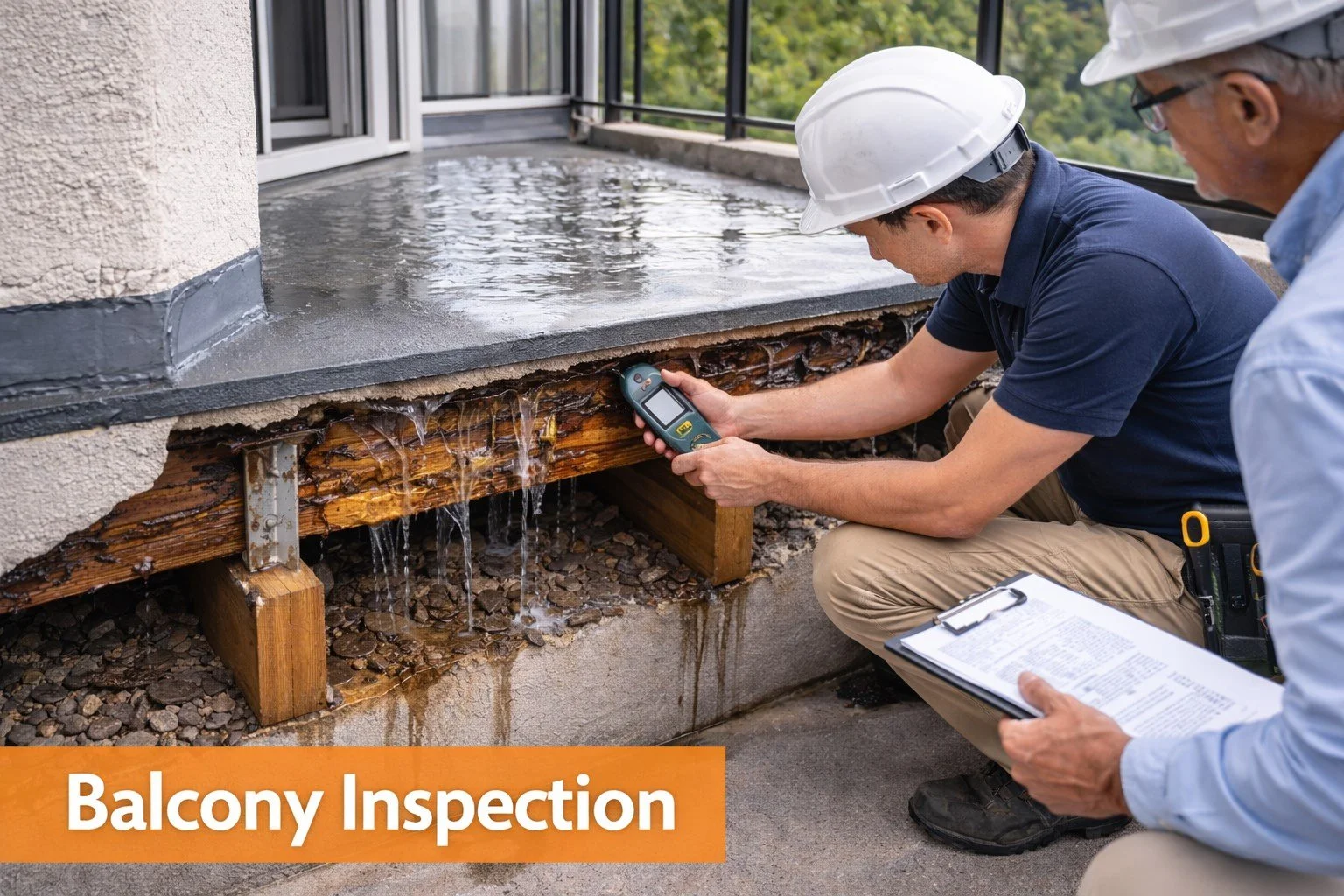
Balconies are commonly inspected as part of exterior elevated element evaluations in multi-family buildings. Inspectors focus on:
Structural framing
Waterproofing performance
Moisture intrusion
Guardrail stability
Load-bearing elements
Because balconies are integrated into the building envelope, waterproofing failures are a major inspection concern.
Decks
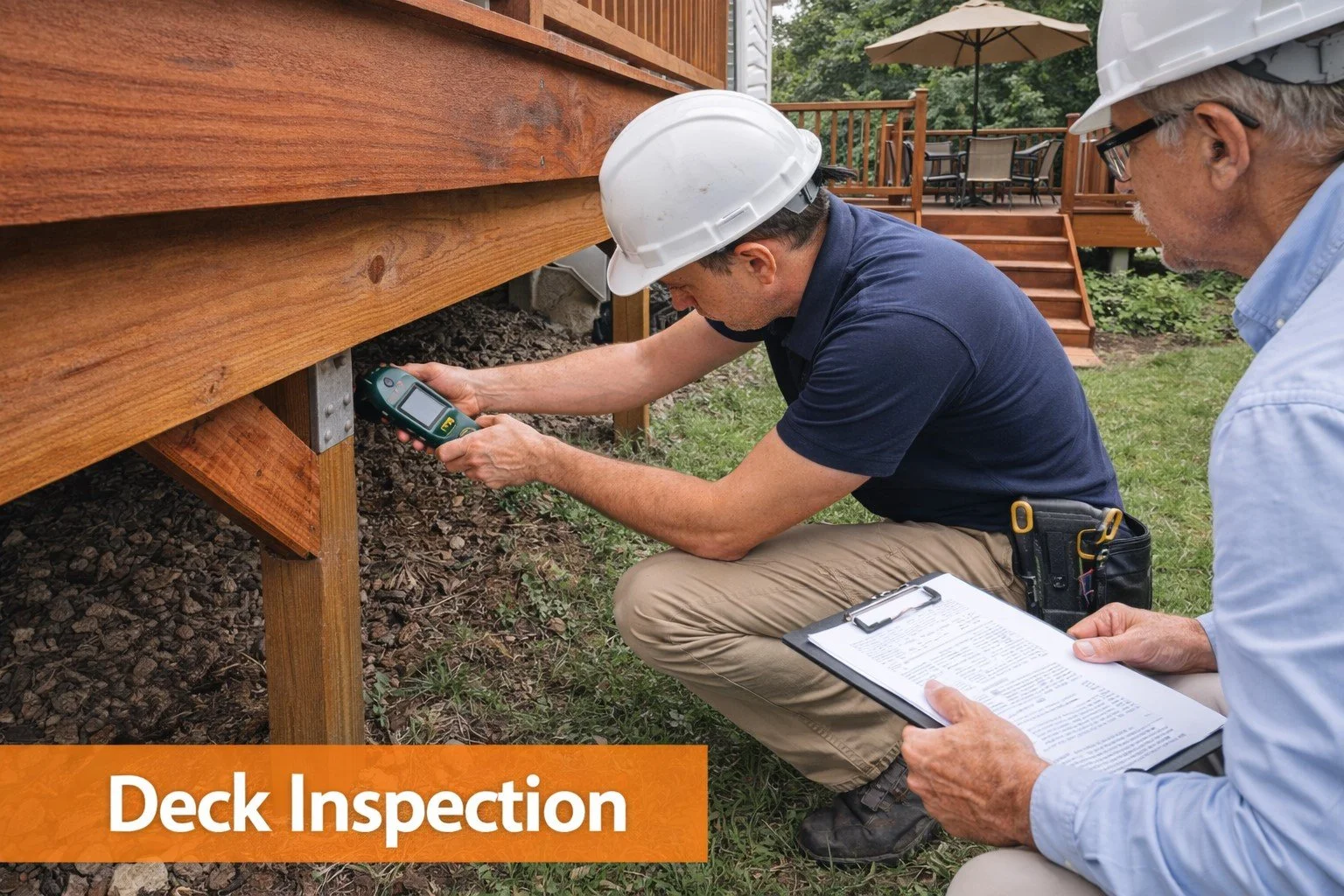
Deck inspections may focus on post and beam connections, ledger board attachment, joist condition, railing stability, and footing performance. Inspectors evaluate these components to ensure the deck is structurally sound, properly supported, and safe for occupant use.
Decks that are elevated and supported by wood-based framing may also fall under regulated inspection programs.
Balcony vs Deck Under California Inspection Laws
In California, inspection requirements are primarily tied to Exterior Elevated Elements (EEEs) rather than simply whether a structure is called a balcony or a deck.
An exterior structure may fall under inspection requirements when it:
Is elevated above grade
Is attached to a building
Relies on wood or wood-based load-bearing components
CA-SB 721 (Apartments & Multi-Family Buildings)
For apartment and multi-family properties, balconies and elevated decks may be inspected under CA-SB 721 when they meet the definition of exterior elevated elements.
CA-SB 326 (Condos & HOAs)
For condominium and HOA-managed buildings, balconies and certain elevated decks may be inspected under CA-SB 326 when applicable.
In both cases, inspectors evaluate structural integrity, moisture conditions, and safety-related components.
The key point is that inspection requirements depend on building type and structure, not just the label “balcony” or “deck.”
Maintenance and Compliance Considerations
Both balconies and decks require:
Regular visual checks
Maintenance of waterproofing and coatings
Monitoring for wood decay and corrosion
Prompt repair of structural concerns
Failure to maintain either structure can lead to safety risks, inspection findings, and potentially required corrective action.
How Great Escape Service & Inspection Can Help
When evaluating balconies and decks, Great Escape Service & Inspection provides professional assessments focused on safety, structural condition, and compliance requirements.
Our inspections identify moisture intrusion, wood decay, railing instability, and structural concerns affecting exterior elevated elements. Based on inspection findings, we provide documentation and guidance to help property owners and HOAs understand required repairs and compliance obligations.
Conclusion
While balconies and decks may appear similar, they differ in structural design, support systems, and moisture risk profiles. Balconies often rely on concealed structural support integrated into the building, while decks typically transfer loads through posts and footings.
From an inspection standpoint, both can fall under exterior elevated element requirements when they meet specific criteria. Understanding these differences helps homeowners, property managers, and HOAs maintain safety, prevent moisture-related damage, and stay aligned with applicable inspection standards.
FAQs:
What is the main difference between a balcony and a deck?
A balcony is typically an elevated platform supported by the building structure, often cantilevered. A deck is usually supported by posts and footings, transferring loads to the ground.
Is a balcony stronger than a deck?
Strength depends on design and construction quality. Both can be safe when properly built and maintained.
Are balconies and decks inspected differently?
Inspection focus may differ based on structural design. Compliance requirements depend on building type and exterior elevated element criteria.
Can a deck be considered a balcony?
In casual language, yes, but structurally they may differ. Inspection requirements depend on how the structure is built and supported.
Do both fall under SB 721 or SB 326?
Yes, if they meet the definition of exterior elevated elements in regulated buildings.
Are balconies more prone to water damage?
Balconies can have a higher moisture risk because they are integrated into the building envelope.
Do decks require waterproofing?
Decks require moisture protection and proper drainage. Waterproofing needs depend on design and exposure.
Which is more expensive to repair?
Costs depend on damage severity and structural involvement. Concealed structural repairs may increase complexity.
Are railings required on both?
Yes, elevated balconies and decks require guardrails for safety.
Who should inspect balconies and decks in California?
Qualified inspection professionals should evaluate elevated exterior structures for safety and compliance.