Waterproofing Balcony: Why It Matters, How It Works, and When Inspections Are Required
Balcony waterproofing is the process of protecting balcony surfaces and underlying structural components from water intrusion. Proper waterproofing prevents moisture from entering the building envelope, where it can cause wood decay, corrosion, and long-term structural damage.
Because balconies are fully exposed to weather, waterproofing is one of the most critical factors in maintaining safety, durability, and compliance, especially in multi-family and HOA-managed buildings.
Why Balcony Waterproofing Is Important
Water intrusion is one of the leading causes of balcony failures. When water penetrates balcony surfaces, it can travel into concealed framing and connections, causing damage that may not be visible until it becomes severe.
Effective balcony waterproofing helps to:
Prevent wood decay and dry rot
Protect joists, beams, and framing
Reduce corrosion of metal connectors
Extend the life of balcony structures
Minimize costly repairs and liability risks
Without proper waterproofing, even well-built balconies can deteriorate over time.
How Water Enters a Balcony
Balcony water intrusion usually occurs gradually due to repeated exposure rather than a single event.
Surface Wear and Cracking
Over time, balcony surfaces can crack, allowing water to seep below the walking surface.
Failed Waterproofing Membranes
Aging or improperly installed membranes may lose effectiveness and allow moisture penetration.
Poor Drainage
Standing water increases the risk of seepage into seams, edges, and penetrations.
Wall and Door Connections
Improper flashing or sealing where the balcony meets the building is a common entry point for water.
Common Balcony Waterproofing Systems
Several waterproofing methods are used depending on the balcony design and exposure.
Coating and Membrane Systems
These systems create a continuous waterproof barrier over the balcony surface and are commonly used in residential and multi-family buildings.
Sheet Membranes
Sheet membranes are installed beneath finishes to block moisture migration and protect structural components.
Drainage-Based Systems
Some systems include drainage layers that allow water to move away from the structure instead of trapping it.
The correct system depends on balcony construction, usage, and local requirements.
What Happens When Balcony Waterproofing Fails
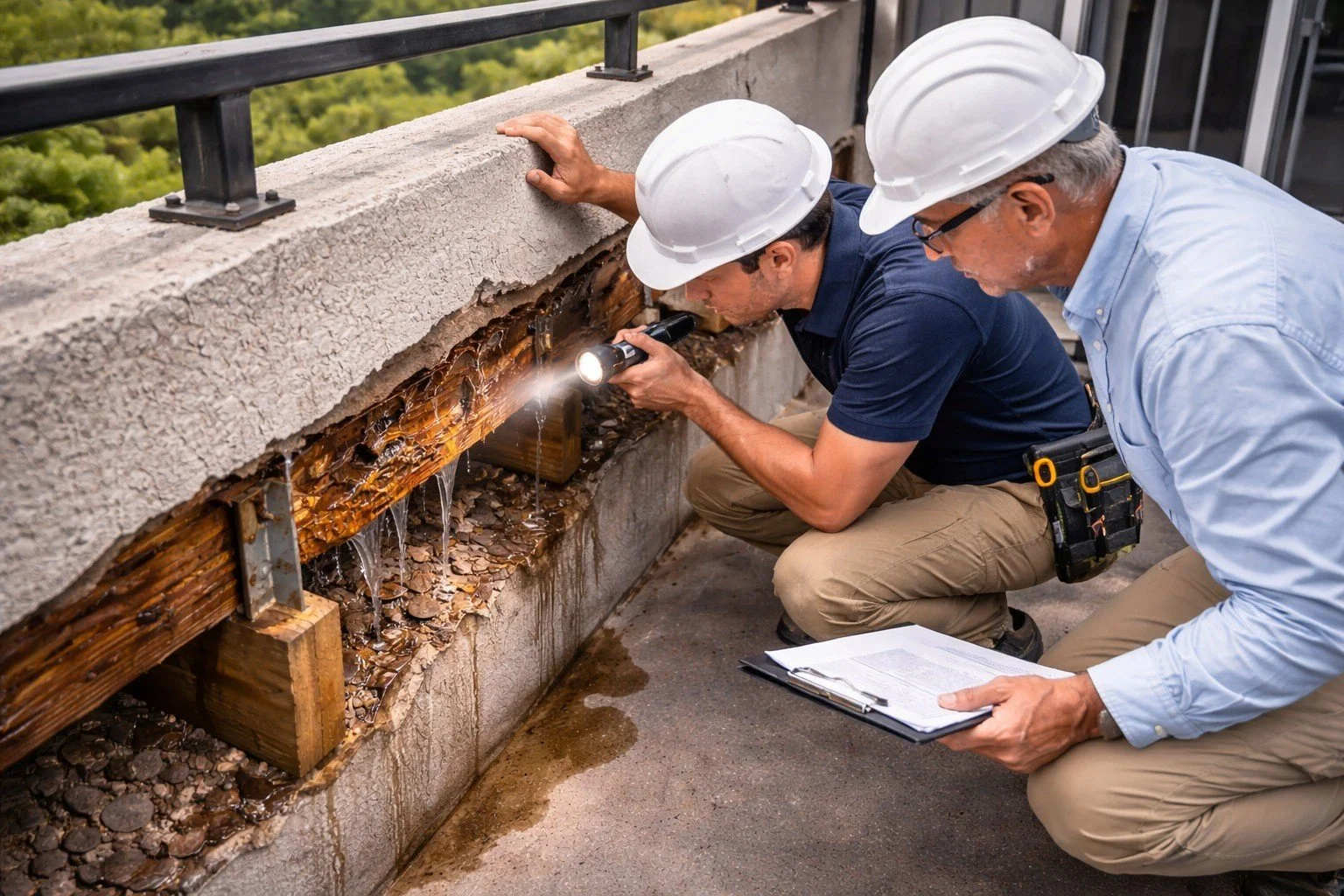
When waterproofing fails, water can reach structural components that were never meant to be exposed.
Common consequences include:
Decayed wood in joists and beams
Loose or unstable railings
Cracked or separating connections
Sagging or movement in balcony structures
Increased risk of inspection failure
In many cases, damage progresses beneath surfaces and may not be obvious without inspection.
Waterproofing and Balcony Inspections in California
In California, balconies are often classified as Exterior Elevated Elements when they are attached to a building and elevated above grade. In these cases, waterproofing plays a direct role in inspection outcomes.
During inspections:
Inspectors assess signs of moisture intrusion
Failed waterproofing may trigger further evaluation
Decay or deterioration linked to waterproofing issues can require repairs
Documentation may be required to demonstrate corrective action
For apartments, this may relate to CA-SB 721 inspections, and for condominiums or HOA-managed properties, CA-SB 326 inspections may apply, depending on the building type and conditions.
Signs a Balcony May Have Waterproofing Issues
Professional evaluation is recommended if you notice:
Water staining or discoloration
Cracked or peeling surface coatings
Soft or spongy areas underfoot
Rusted fasteners or connectors
Movement in railings or framing
Leaks appearing below the balcony
These signs often indicate that water has moved beyond the surface and into structural components.
Is Waterproofing a Maintenance Item or a Structural Issue?
Balcony waterproofing can be either preventive maintenance or a response to structural concerns.
Preventive maintenance involves renewing coatings or membranes before damage occurs.
Structural issues arise when water intrusion has already affected load-bearing components, requiring inspection and repair.
Determining which applies requires professional evaluation, especially for elevated or regulated balconies.
Do Balcony Waterproofing Repairs Require Permits?
Some waterproofing work may be considered maintenance, while other work may require permits.
Permits are more likely when waterproofing involves:
Removal of finishes to access framing
Structural repairs due to decay
Work on the regulated exterior elevated elements
Changes to drainage or waterproofing assemblies
A qualified professional can help determine whether permit review is required.
How Great Escape Service & Inspection Can Help With Balcony Waterproofing Issues
When balcony waterproofing problems are identified, Great Escape Service & Inspection helps homeowners, property managers, and HOAs understand the condition of the balcony and the associated risks.
Our inspections focus on identifying moisture intrusion, assessing whether decay is present, and determining how waterproofing failures affect structural safety. Based on inspection findings, we provide clear documentation and guidance to support proper repairs, compliance requirements, and long-term protection of balcony structures.
Conclusion
Balcony waterproofing plays a critical role in protecting buildings from moisture-related damage and structural deterioration. When waterproofing systems fail, water can reach concealed framing and connections, leading to safety risks that are often hidden from view.
Understanding how balcony waterproofing works, recognizing early warning signs, and knowing when inspections are required helps property owners take timely action. For elevated and multi-family balconies, professional inspection is often the safest way to determine whether waterproofing issues are cosmetic, structural, or compliance-related.
People Also Ask:
What is balcony waterproofing?
Balcony waterproofing is the process of protecting balcony surfaces and underlying materials from water penetration. It helps prevent moisture from reaching structural components inside the building.
Why is balcony waterproofing important?
Without proper waterproofing, water can enter the building envelope and cause wood decay and corrosion. This damage can reduce structural safety and increase repair costs.
How long does balcony waterproofing last?
The lifespan depends on the waterproofing system, weather exposure, and maintenance. Regular inspections help determine when reapplication or repairs are needed.
Can waterproofing failures cause structural damage?
Yes, prolonged water intrusion can weaken wood framing, joists, and connections. Over time, this may lead to serious structural safety concerns.
Are waterproofing issues found during balcony inspections?
Yes, inspectors commonly identify signs of moisture intrusion during balcony inspections. Failed waterproofing often leads to further evaluation of structural components.
Does balcony waterproofing fall under CA-SB 721 or CA-SB 326?
Waterproofing itself is not a legal requirement under these laws. However, waterproofing failures can impact compliance when balconies are inspected under CA-SB 721 or CA- SB 326.
Can balcony waterproofing be done as a DIY project?
Minor surface maintenance may be possible for some balconies. Elevated or regulated balconies should be evaluated by professionals to avoid safety risks.
Do balcony waterproofing repairs require permits?
Some repairs require permits, especially when structural components are involved. Permit requirements depend on the scope of work and local regulations.
What are the early signs of balcony waterproofing failure?
Common signs include cracks, peeling coatings, stains, or soft areas underfoot. These indicators suggest water may be penetrating below the surface.
Who should evaluate balcony waterproofing problems?
Qualified inspection professionals should evaluate waterproofing issues. This helps determine whether the problem is cosmetic, structural, or compliance-related.