California requires fire escape systems in apartment buildings to be inspected on a strict schedule to ensure they remain structurally safe for emergency evacuation. Metal fire escapes can weaken over time due to corrosion, loose hardware, and structural fatigue, which is why the law requires Annual Fire Escape Service & Inspection and the 5-Year Structural Fire Escape Inspection (With Load Testing).
These inspections confirm that ladders, platforms, handrails, bolts, welds, and attachment points can support residents during an emergency.
Fire Escape Inspection Requirements in California
California buildings with fire escapes must complete two mandatory evaluations:
Annual Fire Escape Maintenance (Service & Inspection) – CFC 1032.2.1.2
5-Year Structural Fire Escape Inspection (With Load Testing) – IFC 1104.16.5.1
Both inspections are necessary to verify proper function and structural safety.
Annual Fire Escape Maintenance (Service & Inspection)
During the Annual Fire Escape Maintenance, the inspector evaluates the test and makes sure the drop ladder is in good working condition. This includes checking:
Drop ladder functionality
Replace cable
The locking device is working
Corrosion or rust
Loose or deteriorated bolts and hardware
Egress path is free of obstructions.
The purpose of the Annual Fire Escape Service & Inspection is to confirm that the fire escape is safe for emergency evacuation at all times.
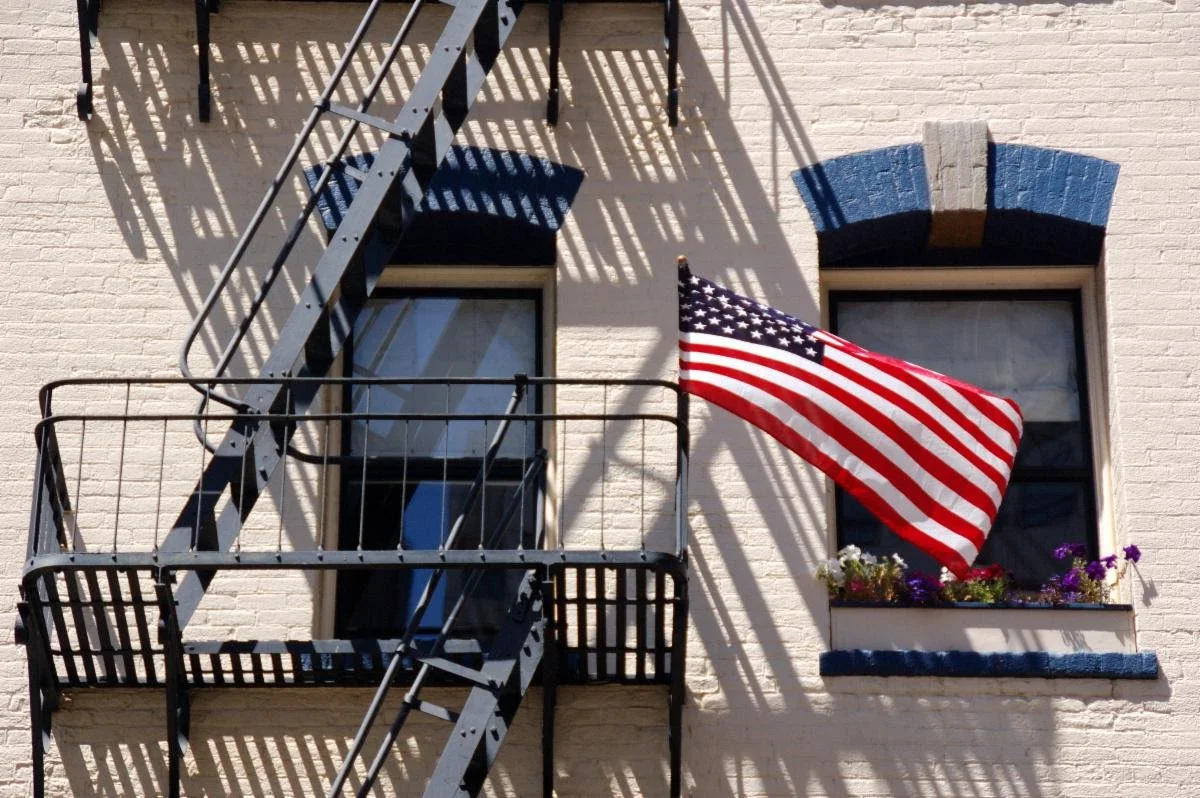
5-Year Structural Fire Escape Inspection (With Load Testing)
The 5-Year Structural Fire Escape Inspection (With Load Testing) is a deeper evaluation that confirms the fire escape can safely hold required emergency loads. This inspection includes:
Structural load testing
Weld strength analysis
Rivet, bolt, and fastener verification
Wall-connection stability
Ladder performance under weight
Platform, stair, and bracket capacity
Signs of metal fatigue, warping, or cracking
If the fire escape does not pass the 5-Year Structural Fire Escape Inspection, repairs must be completed before it can be recertified.
What Elements Are Checked During Fire Escape Inspections?
Both the Annual Fire Escape Maintenance and the 5-Year Structural Fire Escape Inspection review all accessible fire escape components, such as:
Metal platforms
Stair assemblies
Guardrails and handrails
Wall brackets and connections
Fixed ladders and drop ladders
Welded joints
Corrosion levels
Fastener stability
Structural movement or weakness
Each element must be strong enough to support the weight of occupants during an emergency.
How Often Are Fire Escapes Inspected in California?
Annual Fire Escape Maintenance (Service & Inspection) → Every year
5-Year Structural Fire Escape Inspection (With Load Testing) → Every five years
Both inspection cycles must be completed to keep the fire escape compliant and safe.
What Happens If a Fire Escape Fails Inspection?
If the fire escape fails, either the Annual Fire Escape Maintenance or the 5-Year Structural Fire Escape Inspection:
Hazardous components must be repaired
The fire escape cannot be considered safe until repaired
A reinspection may be required
Documentation must be updated to reflect compliance
Fire escapes that cannot support the required loads must not be used for emergency evacuation until corrected.
How Fire Escapes Differ From CA-SB 721 and CA-SB 326
Fire escapes are not part of:
Those laws apply to wood-based Exterior Elevated Elements (EEEs).
Fire escapes follow their own inspection cycles and must complete both the Annual Fire Escape Maintenance and the 5-Year Structural Fire Escape Inspection (With Load Testing).
How Fire Escapes Relate to Section 604
Fire escapes are also reviewed during a Section-604 Inspection, which checks fire escapes and all wood or metal exterior elements from ground to roof. This is a San Francisco Department of Housing requirement only.
However, the 5-Year Structural Fire Escape Inspection (With Load Testing) remains a separate mandatory requirement.
How Great Escape Service & Inspection Helps
Great Escape Service & Inspection provides the full range of California fire escape evaluations, including:
Annual Fire Escape Maintenance (Service & Inspection)
5-Year Structural Fire Escape Inspection (With Load Testing)
Section-604 Inspection
Documentation for compliance
Identification of hazardous conditions
Coordination of required repairs
FAQs
How often must fire escapes be inspected in California?
Fire escapes require the Annual Fire Escape Maintenance (Service & Inspection) every year and the 5-Year Structural Fire Escape Inspection (With Load Testing) every five years.
What is included in a fire escape inspection?
Inspectors check welds, bolts, corrosion, ladders, platforms, handrails, and structural attachments.
Are fire escapes included in CA-SB 721 or CA-SB 326 inspections?
No. Fire escapes follow their own inspection requirements separate from CA-SB 721 Balcony & Deck Inspection (Apartments) and CA-SB 326 Balcony Inspection (Condos & HOAs).
What is tested during the 5-Year Structural Fire Escape Inspection (With Load Testing)?
Load capacity, weld strength, fastener integrity, ladder performance, and platform stability.
Who is qualified to perform fire escape inspections?
Professionals experienced in corrosion assessment, welded metal evaluation, and structural load testing.
What happens if a fire escape fails inspection?
Repairs must be completed, and the fire escape must pass reinspection before certification.
Are fire escapes included in a Section 604 Inspection?
Yes, they are reviewed in a Section-604 Inspection, but the 5-year load test must also be completed separately.
Do apartment buildings need both inspections?
Yes. Any building with a fire escape must complete both required inspection cycles.
What documentation must be kept?
Owners must retain the Annual Fire Escape Certificate on file at the property. An official report of the 5-Year Structural examination must be submitted to the local fire code official.