A joist is a horizontal structural framing member that supports floors, decks, balconies, and ceilings. Joists carry weight from above and transfer that load to beams, walls, or other structural supports.
Joists are one of the most important parts of a building’s structure. While they are often hidden beneath flooring or decking, their condition plays a critical role in safety, stability, and long-term performance.
What Does a Joist Do?
The primary function of a joist is to support weight and distribute loads. Joists work together as a system to hold up:
Floors inside a building
Decks and balconies
Elevated walkways
Ceilings below upper floors
When joists are properly designed and installed, they keep surfaces level, stable, and safe to walk on.
Where Are Joists Commonly Found?
Joists are commonly found in interior floor systems, decks and balconies, exterior elevated walkways, and porch and stair landings. In exterior structures, joists are especially important because they are exposed to moisture and environmental conditions that can lead to deterioration over time.
Because joists often remain hidden beneath flooring or decking, problems can develop without being immediately visible. Regular inspections help identify early signs of damage and reduce the risk of more serious structural issues.
Common Types of Joists
Wood Joists
Wood joists are the most common type in residential and light commercial construction. They are typically made from dimensional lumber or engineered wood products.
Engineered Joists
Engineered joists, such as I-joists, are designed for consistent strength and longer spans. They are commonly used in modern construction.
Steel Joists
Steel joists are used in some commercial or specialised applications where higher load capacity or fire resistance is required.
Joists in Decks and Balconies
In decks and balconies, joists support the walking surface and transfer loads to beams or ledger boards. Exterior joists are more vulnerable than interior joists because they are exposed to:
Moisture and water intrusion
Temperature changes
Rot, decay, and corrosion of fasteners
Because of this exposure, joists in exterior elevated elements require careful inspection and maintenance.
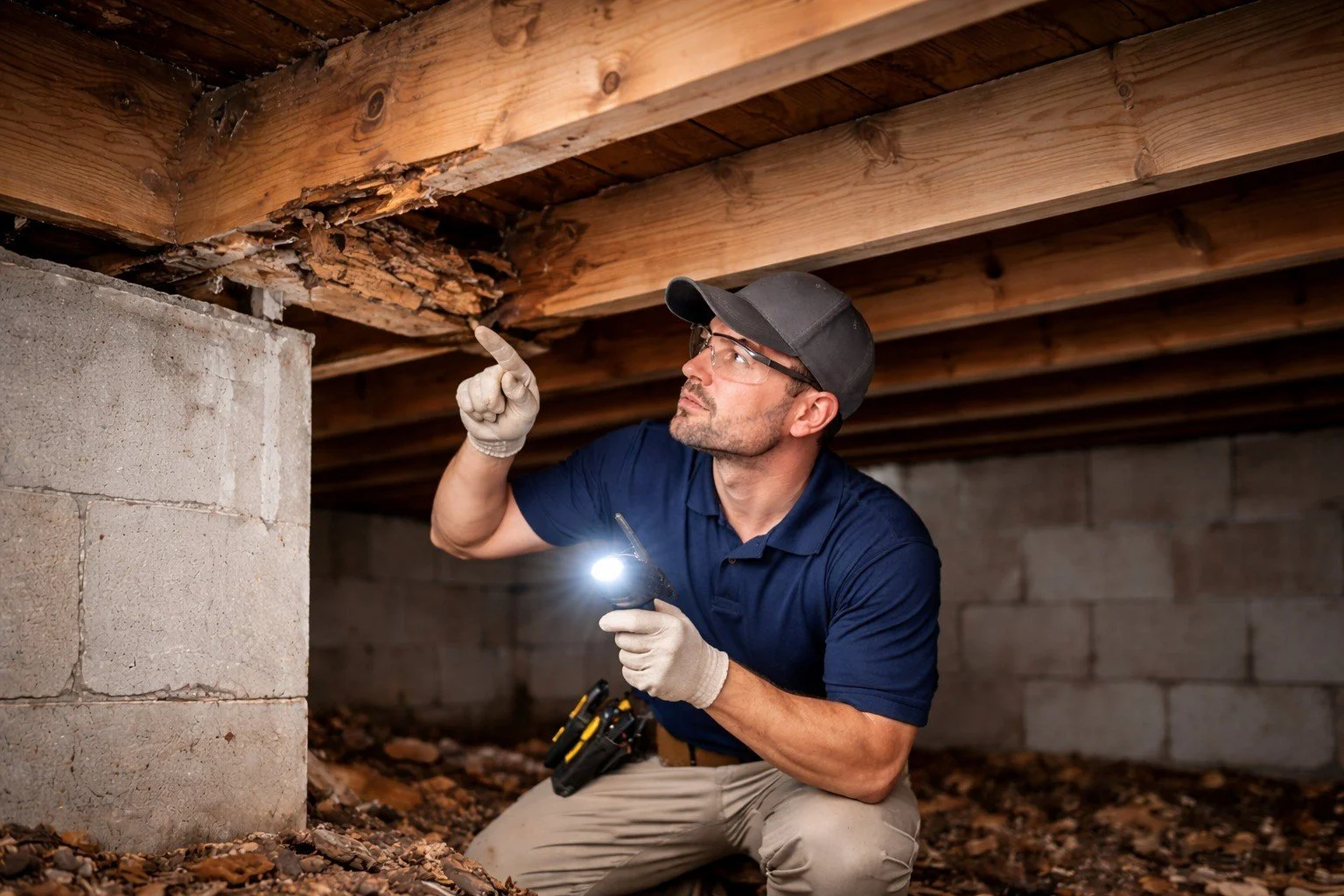
Why Joists Matter During Inspections
Joists are a primary focus during structural and safety inspections because failure at the joist level can lead to sagging or bouncing surfaces, cracks or separation at connections, unsafe walking conditions, and in severe cases, partial or full structural failure.
For this reason, inspectors pay close attention to joists when evaluating decks, balconies, and other elevated structures.
What Inspectors Look for in Joists
Structural Condition
Inspectors look for cracking, splitting, warping, or loss of section that may weaken the joist’s ability to carry loads.
Moisture Damage and Dry Rot
Water exposure can lead to dry rot and decay, especially in exterior joists. Soft or deteriorated wood is a serious safety concern.
Proper Support and Connections
Beams, walls, or ledgers must properly support joists. Inspectors also evaluate joist hangers, fasteners, and connectors for corrosion or failure.
Spacing and Alignment
Improper joist spacing or misalignment can affect load distribution, leading to uneven or unstable surfaces.
Signs of Movement
Excessive bounce, sagging, or deflection may indicate overstressed or damaged joists.
Joists and California Exterior Inspections
In California, joists become especially important during inspections of Exterior Elevated Elements such as decks and balconies.
When exterior joists are part of an elevated structure that relies on wood or wood-based components, they may fall under inspection requirements depending on the building type.
Apartment and multi-family buildings may be inspected under CA-SB 721
Condominiums and HOA-managed buildings may be inspected under CA-SB 326
In these cases, joists are evaluated as part of the overall structural system supporting the elevated element.
Common Joist Problems Found During Inspections
Some of the most common joist-related issues include:
Dry rot from long-term moisture exposure
Improper or missing joist hangers
Corroded fasteners and connectors
Undersized joists for the required load
Damage to the ledger or beam connections
These issues often develop gradually and may not be visible without a professional evaluation.
Can Joists Be Repaired?
Some joist issues can be repaired, while others may require partial or full replacement depending on the severity of the damage, whether the joist is load-bearing, the location of the joist (interior versus exterior), and applicable code or permit requirements. Minor issues such as limited surface damage or early-stage deterioration may be addressed with targeted repairs, while extensive decay or structural compromise often requires replacement.
Because joists play a critical role in supporting floors, decks, and balconies, structural joist repairs should always be evaluated and performed by qualified professionals to ensure safety, long-term performance, and compliance with building standards.
Do Joist Repairs Require Permits?
Yes, Joist repairs may require permits when they involve structural framing, load-bearing components, exterior elevated elements, or safety-related work. A licensed professional can help determine whether permits are required and what level of repair is appropriate for the specific situation.
How Great Escape Service & Inspection Helps
Great Escape Service & Inspection evaluates joists as part of deck, balcony, and exterior elevated element inspections throughout California.
Their inspections focus on:
Joist condition and load-bearing integrity
Moisture intrusion and dry rot risks
Connector and fastener performance
Safety and compliance considerations
They help property owners understand what is required, what is recommended, and what should be addressed first.
Conclusion
A joist is a critical structural component that supports floors, decks, and balconies by carrying and distributing loads. While joists are often hidden from view, their condition directly affects safety and stability.
Understanding what a joist is, how it functions, and why it matters during inspections helps homeowners and property owners identify risks early and make informed decisions. When joists are part of exterior elevated structures, professional inspection becomes especially important.
FAQs
What is a joist in simple terms?
A joist is a horizontal structural member that supports floors, decks, or balconies. It carries weight and transfers it to beams, walls, or other supports.
What is the difference between a joist and a beam?
A joist directly supports the walking or floor surface. A beam supports multiple joists and transfers their load to columns or walls.
Are joists load-bearing?
Yes, joists are load-bearing structural components. They are designed to safely carry people, furniture, and building loads.
What causes joists to fail?
Joists commonly fail due to moisture intrusion, dry rot, or long-term water exposure. Improper installation and corroded connectors can also weaken them.
Do joists need to be inspected?
Yes, especially when they are part of decks, balconies, or elevated structures. Inspections help identify hidden damage before it becomes a safety issue.
Can a damaged joist be repaired?
Some joist damage can be repaired depending on the severity and location. Structural damage usually requires evaluation by a qualified professional.
Do joists rot faster outdoors?
Yes, exterior joists are more exposed to moisture and weather conditions. This makes them more prone to decay than interior joists.
Are joists checked during CA-SB 721 or CA-SB 326 inspections?
Yes, joists are inspected when they are part of regulated exterior elevated elements. Their condition is critical to overall structural safety.
How can I tell if a joist is failing?
Signs include sagging, excessive bounce, cracking, or soft wood. Movement at connections can also indicate a problem.
Who should inspect joists in California?
Qualified inspection professionals with experience in structural and exterior inspections should evaluate joists. This helps ensure safety and compliance.