How To Stabilize A Wobbly Deck Railing Safely: A Guide By Great Escape Services
A wobbly deck railing is more than just an annoyance. It is a serious safety concern that increases the risk of falls, injuries, and potential liability for property owners. Deck railings are designed to resist force and provide stability, so any noticeable movement should be addressed promptly.
This guide explains why deck railings become unstable, provides practical solutions for stabilizing them, and explains when repairs should move beyond DIY fixes and involve professional inspection or repair.
Why A Wobbly Deck Railing Is A Safety Issue
Deck railings are meant to act as a protective barrier, especially on elevated decks, balconies, and walkways. When a railing moves, shakes, or feels loose, it may no longer be able to support the force applied to it.
A wobbly railing can lead to:
Increased fall risk for residents and guests
Failure during normal use or emergencies
Inspection failures in regulated buildings
Liability exposure for owners, HOAs, and managers
For elevated decks, even minor railing movement should be treated as a safety warning.
Common Causes Of A Wobbly Deck Railing
Before stabilizing a railing, it is important to understand why it became loose.
Loose Or Corroded Fasteners
Over time, screws, bolts, and nails can loosen due to vibration, weather exposure, and wood movement. In exterior environments, corrosion can also weaken metal fasteners.
Railing Posts Not Properly Anchored
Railing posts that are only surface-mounted or improperly fastened to the deck framing are more likely to loosen over time, especially under repeated pressure.
Wood Rot or Deterioration
Moisture intrusion can cause dry rot or decay at the base of railing posts or within deck framing, reducing the holding strength of fasteners.
Deck Framing Movement
If the deck structure itself shifts or deflects, the railing system may move with it, even if the railing components appear intact.
Initial Checks Homeowners Can Perform
Homeowners can start with basic visual and physical checks to identify obvious issues.
Gently push the railing to observe movement
Inspect fasteners for looseness or rust
Look for cracks, soft wood, or separation at post bases
Check whether the movement is isolated to one section or widespread
If movement is widespread or the wood feels soft, the issue may extend beyond the railing itself.
Solutions For Stabilizing A Wobbly Deck Railing
The appropriate solution depends on the cause of the movement and the condition of the surrounding structure.
Tightening Or Replacing Fasteners
If the railing is loose due to minor fastener movement:
Tighten existing bolts or screws
Replace corroded fasteners with exterior-rated hardware
Use washers where appropriate to improve holding strength
This approach works best when the surrounding wood is still solid.
Adding Blocking Or Bracing
Additional blocking between deck joists can improve post stability by reducing lateral movement. Bracing helps distribute force and reduces stress at connection points.
This solution is commonly used when posts are structurally sound but lack sufficient support.
Reinforcing Railing Post Connections
In some cases, railing posts may need reinforcement using:
Metal post brackets
Through-bolting rather than surface screws
Improved attachment to load-bearing framing members
Proper reinforcement can significantly reduce railing movement when installed correctly.
Repairing Or Replacing Damaged Wood
If wood rot or deterioration is present, tightening fasteners alone will not solve the problem. Damaged wood must be repaired or replaced before the railing can be stabilized.
Ignoring rot can lead to recurring looseness and further structural damage.
Addressing Underlying Deck Framing Issues
When railing movement is caused by deck framing deflection or deterioration, the focus must shift to the deck structure itself. Stabilizing the railing without addressing framing issues will not provide a lasting solution.
When Diy Fixes Are Not Enough
DIY fixes may be appropriate for minor issues, but professional evaluation is recommended when the deck or railing is elevated, movement is severe or worsening, wood rot or moisture damage is present, multiple railing sections are affected, or the deck is part of a multi-family or HOA-managed building. In these situations, railing instability may indicate broader structural or safety concerns that require professional inspection and repair.
Deck Railing Safety And California Inspections
In California, deck railings are closely reviewed during inspections of Exterior Elevated Elements, especially in multi-family buildings.
When decks or balconies fall under inspection requirements:
Railing stability is evaluated as a life-safety component
Loose or unstable railings can trigger inspection failures
Repairs may require permits depending on the scope and location
Deck railing issues are commonly identified during inspections related to CA-SB 721 (apartments) and CA-SB 326 (condos and HOAs) when applicable.
Do Railing Repairs Require Permits?
Yes, railing repairs may require permits when they involve structural framing, load-bearing components, replacement of railing posts, or work on regulated exterior elevated elements. A qualified professional can help determine whether a repair is considered routine maintenance or requires permit review.
How Great Escape Service & Inspection Helps
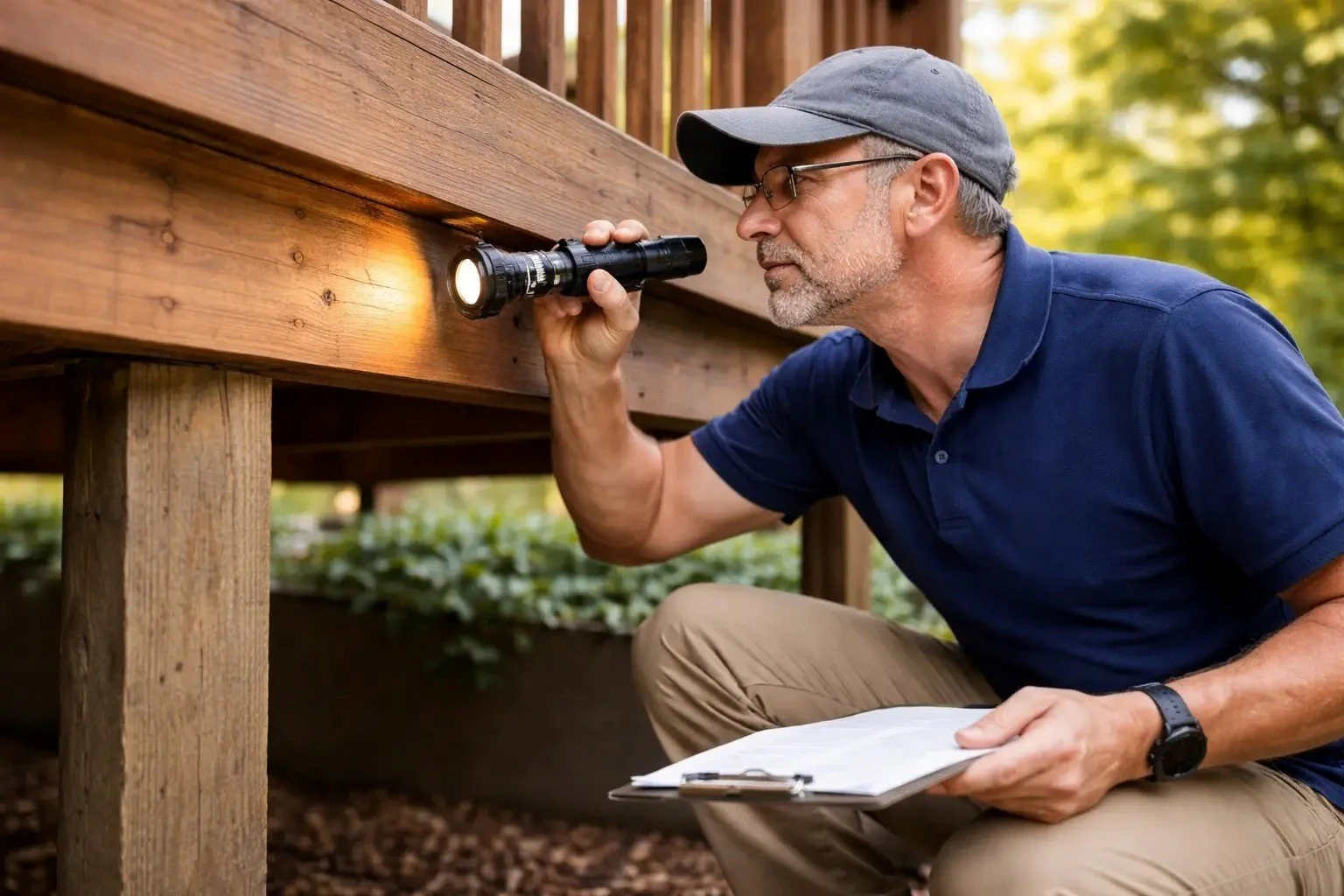
Great Escape Service & Inspection evaluates deck railings as part of deck, balcony, and exterior elevated element inspections across California.
Our services help property owners and HOAs:
Identify the cause of railing movement
Determine whether the issue is isolated or structural
Understand inspection and safety implications
Plan appropriate repairs and next steps
This approach helps prevent recurring issues and supports long-term safety.
Conclusion
A wobbly deck railing is a clear safety signal that should not be ignored. While some stability issues can be addressed with basic repairs, others may point to deeper structural or moisture-related problems.
Understanding the cause of railing movement and choosing the correct solution helps protect occupants, avoid inspection issues, and reduce liability. When in doubt, professional inspection is the safest way to ensure the railing and deck structure remain secure.
Faqs
Why is my deck railing wobbly?
Deck railings commonly become loose due to fastener movement, wood deterioration, or inadequate post anchoring. Structural deck movement can also contribute to instability.
Is a wobbly deck railing dangerous?
Yes. A loose railing may fail under pressure, increasing the risk of falls and injuries.
Can I fix a wobbly railing myself?
Minor issues may be addressed with tightening or reinforcement, but a professional should evaluate structural or elevated railing problems.
Do loose railings fail inspections?
Yes. Unstable railings are commonly cited during safety and structural inspections.
What is the best way to stabilize a railing post?
The best method depends on the cause and may include reinforcing connections, adding blocking, or repairing damaged wood.
Does wood rot affect railing stability?
Yes. Rot reduces the holding strength of fasteners and often requires wood replacement.
Do deck railing repairs require permits?
Some do, especially when structural components are involved.
Are railings checked during CA-SB 721 or CA-SB 326 inspections?
Yes, when railings are part of regulated exterior elevated elements.
How much movement is acceptable in a deck railing?
Notable movement is generally unacceptable and should be investigated.
Who should inspect a wobbly deck railing?
Qualified inspection professionals, such as Great Escape Service & Inspection, can evaluate railing stability and safety.