What Is a Terrace in an Apartment? Design, Uses, Safety & Maintenance Explained
A terrace in an apartment is a large outdoor living space connected to a residential unit or building structure. Unlike smaller exterior spaces, terraces are designed to provide functional outdoor areas for relaxation, dining, entertainment, and everyday use.
In apartment buildings across California, including the San Francisco Bay Area and Greater Los Angeles, terraces have become highly desirable because they provide valuable outdoor space in dense urban environments. However, terraces are more than just architectural features. They also depend on proper structural support, waterproofing systems, drainage performance, and ongoing maintenance to remain safe and functional over time.
At Great Escape Service & Inspection, we regularly evaluate exterior elevated structures connected to apartment buildings, helping property owners identify hidden structural and moisture-related concerns before they become major safety issues.
What Is a Terrace in an Apartment?
A terrace in an apartment is a flat outdoor area attached to a residential building or unit. Terraces are often larger than balconies and may be located on rooftops, setback levels, podium structures, or ground-supported platforms.
These spaces are commonly designed for:
Outdoor seating
Dining areas
Gardening and planters
Social gatherings
Rooftop recreation
Because terraces provide larger usable outdoor areas, they are often considered premium features in modern apartment developments.
How Is a Terrace Different From a Balcony?
Although terraces and balconies are both outdoor apartment features, terraces are generally larger and provide more usable living space. Terraces are commonly built on flat surfaces such as rooftops or setback areas, while balconies usually project outward from the building structure.
If you want a more detailed breakdown of exterior elevated structures and design differences, related balcony and deck inspection topics can help explain how these systems function and why structural safety matters.
Common Types of Apartment Terraces
Apartment terraces come in different styles depending on the building's design and layout.
Some of the most common types include:
Rooftop terraces
Private apartment terraces
Shared community terraces
Podium-level terraces
Setback terraces in high-rise buildings
Ground-level terraces
In dense urban areas like the San Francisco Bay Area, rooftop terraces are especially popular because they maximize outdoor space while maintaining building efficiency.
Rooftop Terraces in Apartment Buildings
Rooftop terraces are one of the most desirable outdoor features in modern apartment developments because they provide additional outdoor living space for relaxation, entertainment, dining, and social gatherings. Many rooftop terraces include seating areas, landscaping, decorative finishes, and open city views that enhance both comfort and property appeal.
However, because these terraces remain constantly exposed to sunlight, rain, moisture, and changing weather conditions, they require proper drainage systems, reliable waterproofing membranes, safe railing systems, and careful structural load management.
Without regular maintenance and inspection, rooftop terraces can develop moisture intrusion and waterproofing failures that may gradually damage concealed structural components beneath the surface.
Why Apartment Terraces Are Popular
Apartment terraces have become increasingly popular because they provide functional outdoor living space that improves both comfort and property value. A well-designed terrace can create better natural airflow, provide space for outdoor entertainment, offer an additional relaxation area, support urban gardening, and increase the overall usable living space of an apartment.
Terraces also improve the visual appeal of residential buildings and give occupants a more open and comfortable living experience. For many residents, especially in dense urban environments where private outdoor areas are limited, a terrace functions as a natural extension of the apartment itself.
Structural Considerations for Apartment Terraces
Although terraces are designed for comfort and outdoor use, they are still structural building components that must safely support weight and environmental exposure over time.
Important structural considerations include:
Load-bearing capacity
Waterproofing performance
Drainage efficiency
Surface materials
Structural framing integrity
Railing stability
Overloading terraces with heavy furniture, planters, or equipment can increase stress on structural components. In some cases, moisture intrusion beneath terrace surfaces can weaken concealed framing systems over time.
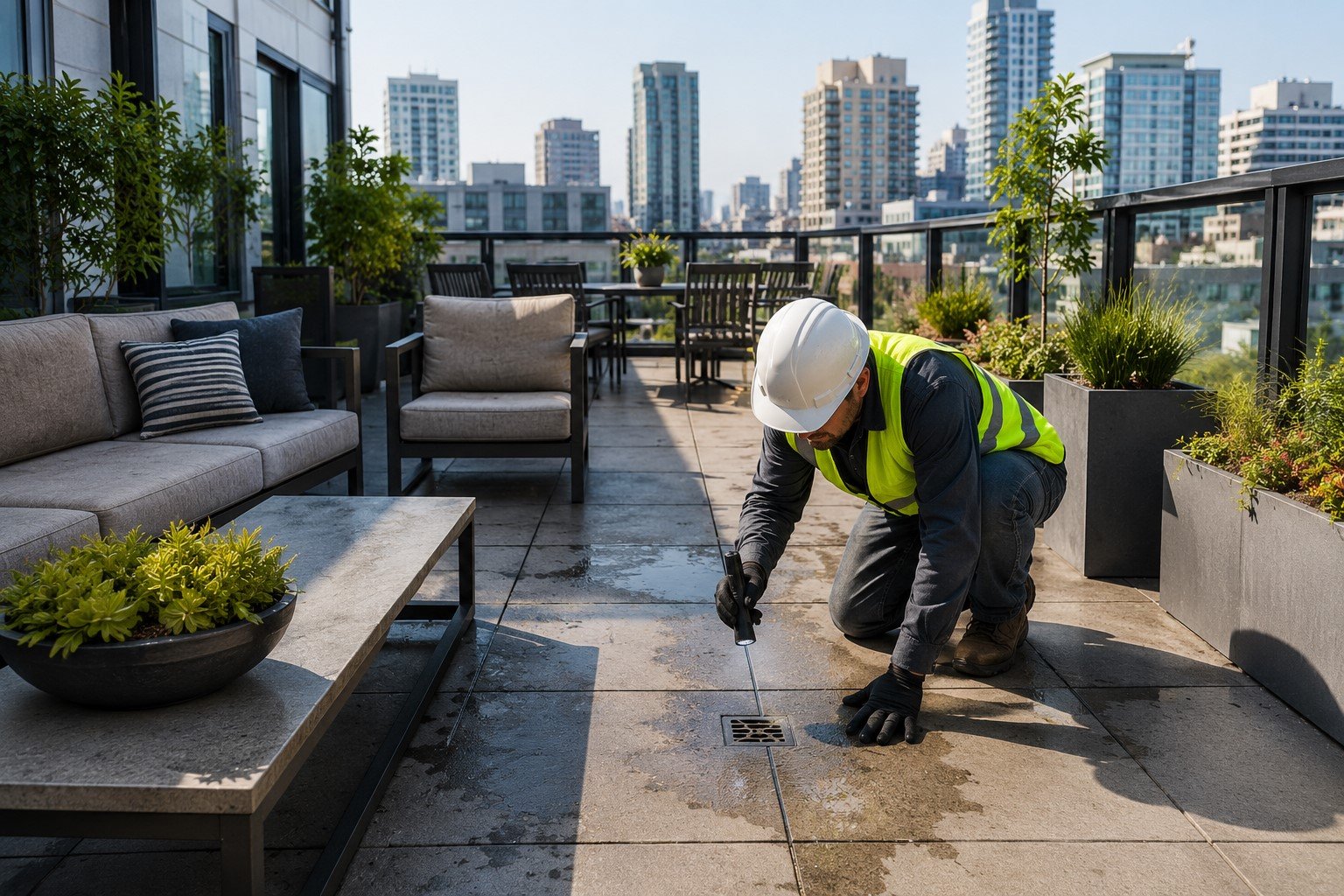
Are Apartment Terraces Considered Exterior Elevated Elements (EEE)?
Some apartment terraces may qualify as Exterior Elevated Elements (EEE) under California law if they:
Extend beyond exterior walls
Are elevated more than 6 feet above ground level
They are designed for human use
Rely on wood or wood-based structural support
Under California inspection laws, qualifying Exterior Elevated Elements may require periodic inspection to ensure they remain structurally safe and free from hazardous conditions.
Why Waterproofing Matters for Apartment Terraces
Waterproofing systems are one of the most important components of any apartment terrace because they help protect the structure from long-term moisture damage. These systems may include flashings, waterproof membranes, sealants, protective coatings, and drainage components designed to keep water away from concealed structural framing.
When waterproofing systems fail, moisture can penetrate beneath terrace surfaces and gradually damage wood framing, connectors, and other load-bearing components. Over time, this may lead to wood decay, corrosion, deterioration, and structural weakening.
California regulations specifically reference associated waterproofing systems because they play a critical role in protecting exterior elevated structures from water-related damage and maintaining long-term structural safety.
Common Maintenance Problems in Apartment Terraces
Because terraces are constantly exposed to weather and occupant use, maintenance issues can develop gradually over time.
Some of the most common problems include:
Ponding water
Cracked surfaces
Failed waterproofing systems
Drainage blockages
Loose railings
Water intrusion
Surface deterioration
Hidden wood rot beneath finishes
Many of these issues remain concealed beneath terrace surfaces and may not become visible until significant deterioration has already occurred.
Apartment Terrace Safety and Inspection Awareness
In apartment buildings with elevated terraces, regular inspections can help identify structural and moisture-related problems before they become serious safety hazards.
Professional inspections may evaluate:
Structural framing condition
Waterproofing systems
Drainage performance
Moisture intrusion
Surface deterioration
Guardrail and railing stability
Property owners in areas like Greater Los Angeles and the San Francisco Bay Area often schedule professional inspections proactively to help maintain the safety of elevated exterior structures and reduce long-term repair costs.
Supporting Terrace Safety Through Professional Evaluations
Apartment terraces may appear simple on the surface, but beneath the finished materials are structural and waterproofing systems that require ongoing attention and proper maintenance. Hidden deterioration can slowly develop over time, especially in elevated exterior structures exposed to moisture and changing weather conditions.
At Great Escape Service & Inspection, we help apartment owners, HOAs, and property managers throughout California evaluate exterior elevated structures connected to residential buildings.
Our services include:
Balcony inspections
Deck inspections
Exterior Elevated Element (EEE) inspections
CA-SB 721 apartment inspections
CA-SB 326 HOA inspections
We assist property owners across the San Francisco Bay Area and Greater Los Angeles in identifying waterproofing failures, moisture damage, and structural concerns before they turn into costly repairs or compliance issues.
Frequently Asked Questions
What is a terrace in an apartment?
A terrace is a large outdoor space connected to an apartment or building structure. It is commonly used for seating, relaxation, dining, gardening, and outdoor living activities.
Are terraces safe in apartment buildings?
Terraces are safe when properly designed, waterproofed, and maintained. Regular inspections help identify hidden structural or moisture-related problems early.
Do apartment terraces require waterproofing?
Yes. Waterproofing systems protect terraces from water intrusion, moisture damage, and long-term structural deterioration.
Can terraces require structural inspections?
Yes. Some elevated terraces may qualify as Exterior Elevated Elements (EEE) and require professional inspection under California regulations.